
Tungsten Electrode Grinder: An Essential Auxiliary Tool for Premium TIG Welding
TIG welding is renowned for its high precision, clean weld seams, and excellent molding effect, and it is widely adopted in precision manufacturing, aerospace, metal processing and other industries that demand strict welding quality. In both manual welding operations and modern automated welding production lines, the condition of tungsten electrodes is one of the core factors that determine welding stability and finished product quality. As a professional supporting tool for TIG welding, the tungsten electrode grinder plays an irreplaceable role in standardizing tungsten electrode processing, optimizing arc performance, and improving overall welding efficiency.
Why Standard Tungsten Electrode Grinding Matters for Welding
The tip shape, angle and smoothness of the tungsten electrode directly affect the ignition effect and stability of the welding arc. In daily welding work, manually polished tungsten electrodes often have irregular angles, uneven surfaces and eccentric polishing deviations. These subtle problems will lead to scattered arcs, unstable heat input, and even cause welding defects such as weld porosity, slag inclusion and uneven weld beads.
The impact of unstandardized tungsten electrodes is more prominent in automated welding production. Modern automated welding equipment relies on precise and repeatable parameter settings to realize batch and stable welding production. If the tungsten electrode tip is not polished uniformly, the arc state will fluctuate constantly, making it impossible for the automated welding system to maintain consistent welding standards. This will not only reduce the yield of finished products, but also increase equipment debugging time and production rework costs, restricting the efficient operation of automated welding lines.
Core Values of Tungsten Electrode Grinders in Welding Production
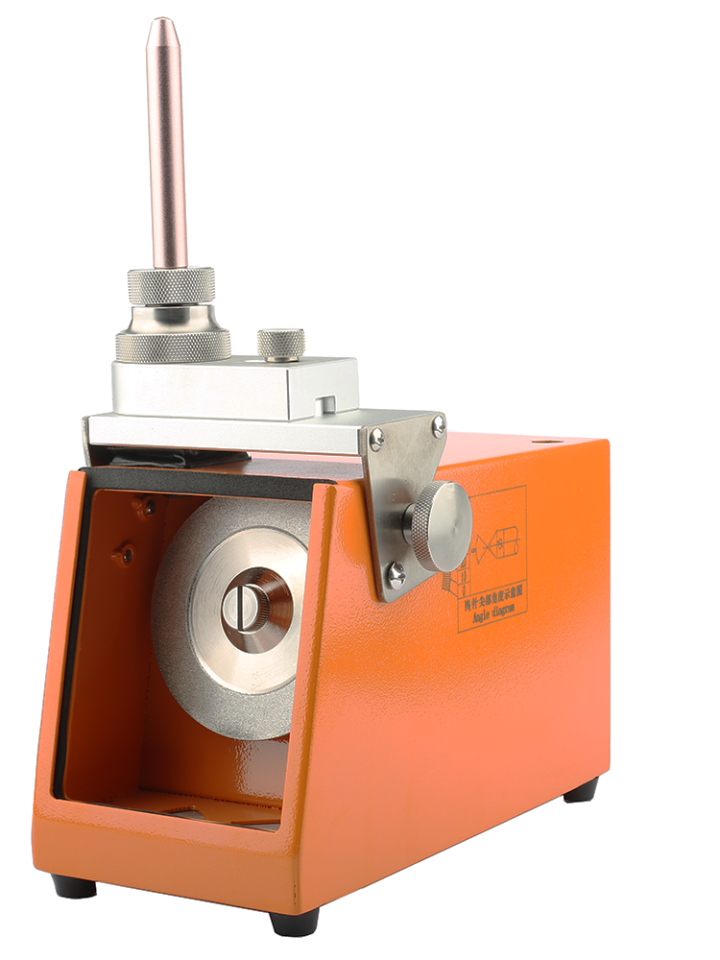
Professional tungsten electrode grinders are designed for standardized tungsten electrode polishing, solving various pain points of manual polishing and perfectly matching the working characteristics of traditional and automated welding equipment, bringing multiple improvements to welding production.
1. Realize standardized polishing and stabilize welding quality
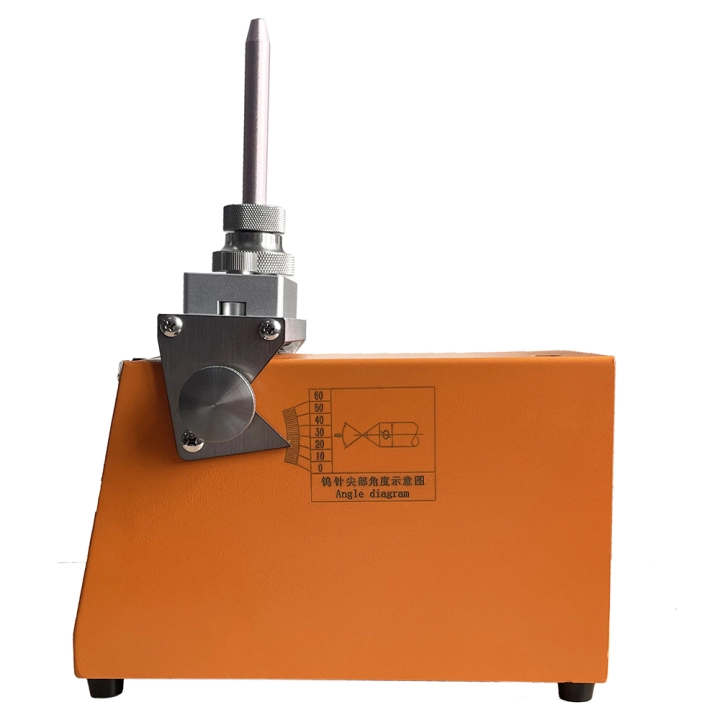
Different welding materials, welding currents and welding processes require matching tungsten electrode tip angles. The tungsten electrode grinder supports flexible adjustment of polishing angles, which can accurately meet the process requirements of various welding scenarios. It ensures that every polished tungsten electrode has a regular shape and consistent angle, forming a concentrated and stable welding arc. Uniform arc heat input effectively avoids common welding defects, greatly improves the flatness and finish of weld seams, and lays a foundation for high-quality welding molding.
2. Strong compatibility to adapt to diverse welding needs
This professional polishing tool is compatible with tungsten electrodes of various common specifications. It can meet the polishing requirements of different electrode sizes involved in conventional metal welding, precision thin plate welding and other processes, covering most TIG welding application scenarios. It is highly adaptable to flexible small-batch welding and standardized large-scale automated welding production.
3. Improve production efficiency and reduce comprehensive costs
Compared with inefficient and error-prone manual polishing, the tungsten electrode grinder realizes fast and integrated polishing. It greatly shortens the electrode pretreatment time for welders, simplifies the pre-welding preparation process, and effectively improves the overall welding operation efficiency. At the same time, the standardized polishing effect reduces welding rework and scrap caused by unqualified electrode tips, lowers the loss of raw materials and time costs, and creates higher economic benefits for welding production.
4. Ergonomic design for safer and more convenient operation
The optimized structural design conforms to ergonomic principles, with stable clamping performance. It can firmly fix the tungsten electrode during polishing to ensure uniform and concentric polishing effect. In addition, the equipment features low noise and energy-saving operation, with a long service life. It is safe and labor-saving to use, effectively improving the working environment of the welding workshop and reducing the operation threshold for workers.
Perfect Matching: Tungsten Grinder & Automated Welding System
The core advantage of automated welding equipment lies in standardization, repeatability and high efficiency, and standardized tungsten electrode pretreatment is the key premise to give full play to the performance of automated welding equipment. Supporting the automated welding production line with a professional tungsten electrode grinder can form a complete set of standardized welding processes from electrode preparation to formal welding.
Uniform tungsten electrode tips ensure stable arc ignition and consistent heat output in each welding cycle of the automated equipment, making the welding track and weld molding more uniform and controllable. It avoids frequent parameter debugging and equipment shutdown adjustment caused by unstable arc conditions, maximizes the continuous operation efficiency of automated welding equipment, and helps enterprises realize stable, high-yield and high-quality welding batch production.
High-quality welding results depend on professional equipment and standardized process auxiliary tools. As an indispensable supporting tool for TIG welding, the tungsten electrode grinder standardizes tungsten electrode polishing, solves the quality instability problem caused by manual operation differences, and perfectly empowers the efficient operation of modern automated welding systems.
For enterprises pursuing refined welding production, matching professional tungsten electrode polishing equipment while deploying advanced automated welding equipment is a simple and efficient way to optimize welding quality, improve production efficiency and reduce production costs.